






















50%
Special offer
0
:
0
:
0
:
0
Day
Hr
Min
Sec
About This Course
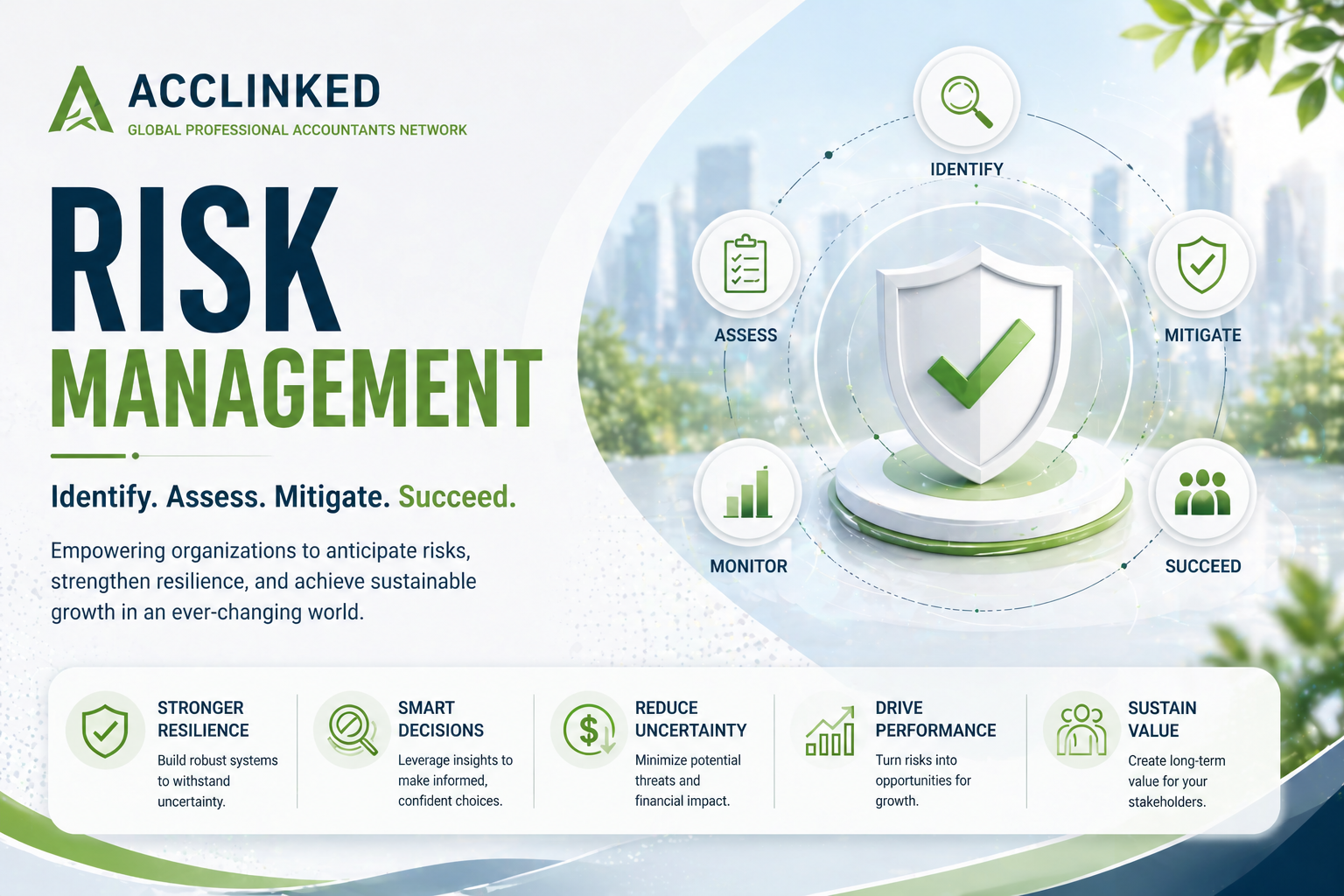
The uploaded file comprehensively covers the topic of Risk Management, reviewing its concepts, processes, and types. Here are the most important pillars included in the file:
1. Introduction to Risk Management and its Objectives:
- Definition of Risk: Any event or action that prevents the organization from achieving its objectives.
- Definition of Risk Management: The process of predicting, assessing, and identifying mitigation measures for risks.
- Review of Course Objectives: Including identifying internal and external risks and the Enterprise Risk Management (ERM) process.
2. Types of Risk:
- Business Risk: Related to factors that cause fluctuations in profits.
- Strategic Risk: Risks affecting the entire organization, such as economic recession and global market changes.
- Political Risk: Arising from political conditions in a country that affect investments.
- Operational Risk: Resulting from failures in internal processes, people, or systems.
- Financial Risk: Related to the company's financial health and ability to access capital.
- Hazard Risk: Insurable events such as natural disasters.
3. Difference Between Internal and External Risks:
- Internal Risks: Arise from within the organization (e.g., processes and systems) and are under management's control.
- External Risks: Arise from the external environment (e.g., economic and political factors) and management has no direct control over them.
4. The Risk Management Process (Five Basic Steps):
- Risk Identification: Analyzing the internal and external environment to identify events that may affect objectives.
- Risk Assessment: Analyzing the probability and impact of risks (using tools like heat maps and quantitative assessment).
- Risk Prioritization: Determining which risks should be addressed first based on their importance.
- Response Planning: Choosing the appropriate method to handle the risk (Avoid, Mitigate, Transfer, or Accept the risk).
- Risk Monitoring: Continuous review to ensure the effectiveness of the implemented strategies.
5. Enterprise Risk Management (ERM):
- A comprehensive (top-down) view of the risks facing the organization.
- Coordinating risk identification and assessment across the entire organization to reduce the chances of overlooking any risks.
6. COSO Framework (2017 Update):
- Focuses on integrating risk management with strategy and performance.
- Consists of five basic components: Governance and Culture, Strategy and Objective-Setting, Performance, Review and Revision, and Information, Communication, and Reporting.
7. The Role of the Management Accountant and Corporate Governance:
- The accountant's role in estimating financial impact and supporting risk-based planning.
- The Board of Directors' responsibility in overseeing the risk management process and appointing a Chief Risk Officer (CRO)."
FAQ
Check the frequently asked questions about this course.
How do I enrol in a course?
Simply click "Enrol now" on the course page, create or log in to your account, and complete checkout. You will receive a confirmation email with access details as soon as your enrolment is confirmed.
Do I need an accounting qualification to enrol?
Not for most courses. Our CPD programmes are open to all finance and accounting professionals, whether you hold a professional designation or are working towards one. Where prior knowledge is recommended, this is clearly stated on the course page.
Can I enrol in more than one course at a time?
Yes, you can enrol in multiple courses simultaneously. Many learners combine complementary topics — such as data skills, ethics, and regulatory updates — to build a well-rounded CPD portfolio for the year.
Is enrolment open throughout the year?
Online courses are available to enrol in at any time. Live webinars and in-person events have scheduled dates — check the events calendar for upcoming sessions.
What payment methods do you accept?
We accept major credit and debit cards, bank transfers, and select digital wallets. If your employer is covering the cost, we can issue a formal invoice to support internal approval or reimbursement processes.
Are group or corporate discounts available?
Yes. We offer tailored corporate packages for organisations looking to upskill teams. Please contact our sales team for a custom quote based on the number of learners and courses required.
What is your cancellation and refund policy?
You may request a full refund within 14 days of purchase, provided you have not completed more than 20% of the course content. After this period, we can transfer your enrolment to another course of equal value.
How long does each course take to complete?
Course length varies. Most programmes range from one to ten hours of learning time. The estimated duration is displayed on each course page so you can plan accordingly.
Do courses count towards my CPD requirement?
Yes. All our courses are designed to meet the CPD requirements of major professional bodies including ACCA, ICAEW, and CIMA. On completion, you will receive a certificate showing the number of CPD hours earned, ready to use in your annual declaration.
Can I access course content after completing the course?
Yes. You retain access to all course materials for 12 months from your enrolment date, allowing you to revisit content whenever you need a refresher.
Are courses available in Arabic?
Yes. We offer courses in both Arabic and English. You can filter by language on the course search page to find programmes delivered in your preferred language.
How do I receive my certificate of completion?
Your certificate is generated automatically once you have completed all course modules and any associated assessments. Download it as a PDF directly from your learning dashboard.
How can I track my total CPD hours?
Our platform provides a centralised CPD log showing all completed activities, hours earned, completion dates, and certificates — everything you need in one place to make your annual declaration straightforward and stress-free.
CPD Instructor
3
Courses
33
Members

Related Courses
Explore newly published courses and stay updated.
Curriculum Overview
This course includes 1 modules, 6 lessons, and 0 hours of materials.
CPD
6 Parts
Lesson 1
Volume
372.33 MB
Lesson 2
Volume
410.41 MB
Lesson 3
Volume
227.1 MB
Lesson 4
Volume
356.1 MB
Lesson 5
Volume
489.33 MB
Lesson 6
Volume
361.56 MB
Certificates
1 Parts
Course Certificate
Course Certificate
If you pass all the lessons in this course, you will receive this certificate.
Type
Course Certificate
0
0 Reviews
Content Quality (0)
Instructor Skills (0)
Value for Money (0)
Support Quality (0)
Excelant Cources Guarantee
This Course Includes
Downloadable Content
Official Certificate
Instructor Support
Course Specifications
Sections
1
Lessons
6
Capacity
Unlimited
Duration
4:00 Hours
Members
73
Access Duration
240 Days
Created Date
18 Apr 2026
Updated Date
13 May 2026


Tags

You are viewing
Risk Managment
Additional Links
Contact Certificate Validation Become Instructor Refund and Cancellation Policy Fulfillment Policy Terms and Conditions About Privacy Policy Why UsUAE
Acclinked. All Rights Reserved. Empowering Learning Worldwide.©2025 UAE License No. 4426764.01


Reply to Comment